For most business apps, cross-platform development is the better choice: one codebase runs on iOS and Android, costs less to build and maintain, and keeps both apps in step. Native development is better when the app depends on deep device hardware, new platform features on day one, or demanding graphics and real-time processing.
That is the short answer. The longer one depends on what your app actually has to do, who will use it, and who will maintain it in three years.
This post explains both approaches in plain terms, the questions business owners ask us before they decide, how we answered them on apps we have shipped, and a five-question way to choose. If you would rather talk it through, that is what our custom web and mobile app development service starts with.
What is native app development?
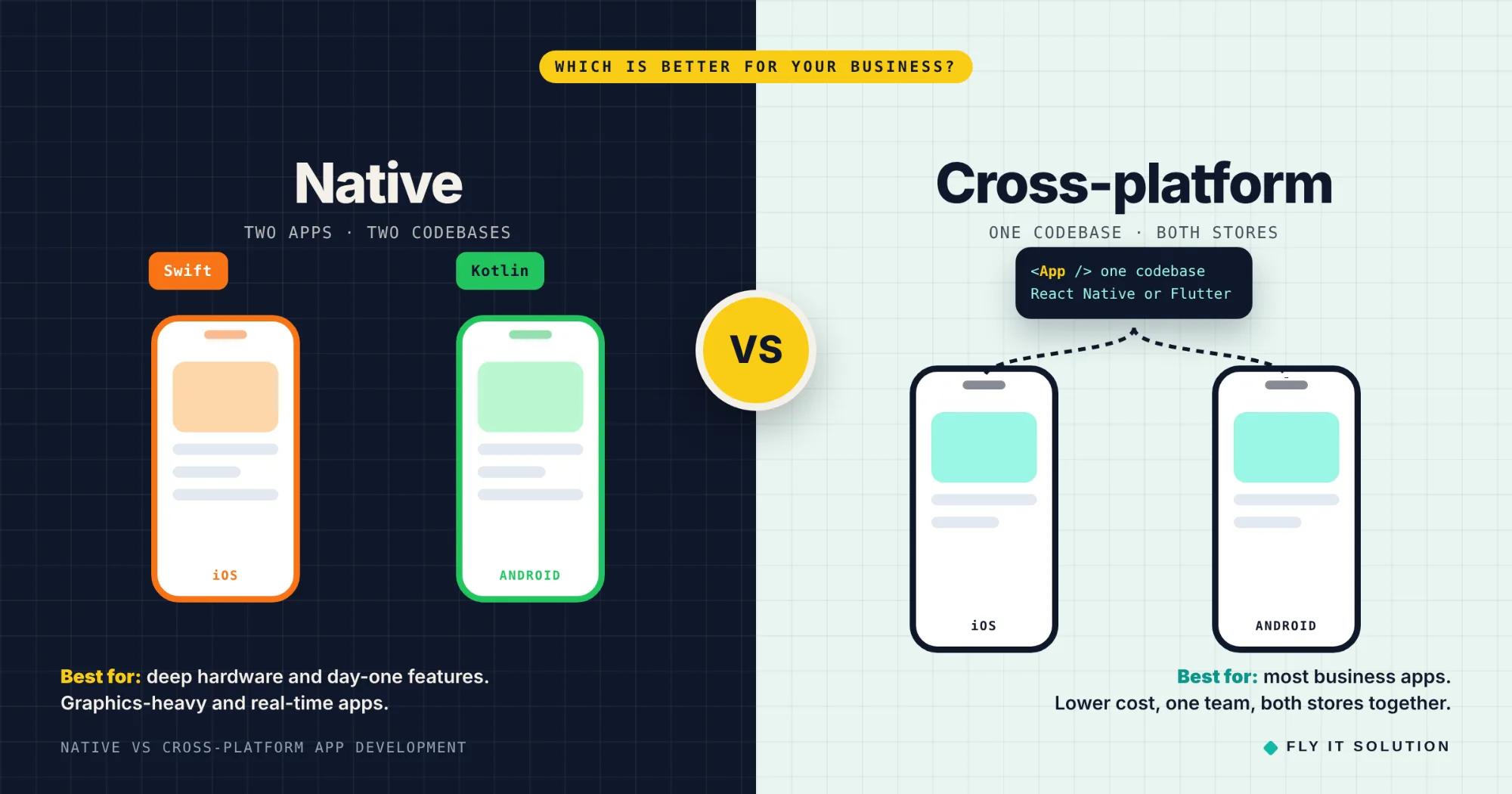
Native app development means building a separate app for each platform in that platform's own language: Swift for iOS and Kotlin for Android. Each app talks directly to its operating system, with access to every API Apple or Google provides.
The trade-off is that you are building, testing and releasing two apps. Every feature is written twice, by developers with two different skill sets.
What is cross-platform app development?
Cross-platform app development means building one app in a shared framework, most often React Native or Flutter, that runs on both iOS and Android. Most of the code is written once, and device features such as the camera, location and notifications are reached through the framework.
You may also hear “hybrid”. Older hybrid apps wrapped a website inside an app shell, which is why some people still associate cross-platform with sluggish apps. Modern frameworks are different: React Native renders real native interface components, and since version 0.82 its rebuilt New Architecture is the only architecture, according to the React Native 0.82 release notes.
What business owners tell us before they choose
Six statements come up in nearly every first conversation about an app. Each one points clearly toward one approach.
“We need iOS and Android, but we can only fund one team.”
Your customers are split across both platforms, and launching on only one leaves half of them out.
What it tells us: cross-platform. One codebase and one team reach both stores, and the budget goes into features rather than into building everything twice.
“Our competitor's app feels smoother than ours.”
Usually this is about the old app, not the approach. Slow screens, laggy scrolling and dated layouts come from how an app was built, more than which framework it uses.
What it tells us: set the performance bar honestly. Lists, forms, maps and payments feel native in a well-built cross-platform app; heavy animation, 3D or real-time media is where native earns its cost.
“The app has to scan codes and use the camera at the door or in the warehouse.”
Camera access, QR and barcode scanning, location and push notifications are everyday requirements for business apps.
What it tells us: cross-platform handles these well. Native becomes necessary only when you need specialized hardware, Bluetooth peripherals with unusual protocols, or a new iOS or Android feature the day it ships.
“Every update means two releases, and the apps have drifted apart.”
The iOS app has a feature the Android app does not, bugs are fixed on one platform weeks before the other, and support cannot tell customers what to expect.
What it tells us: two native codebases maintained by a small team. Moving to one cross-platform codebase, often through a phased rebuild, puts both apps back in step.
“We might hire our own developers later.”
The agency builds version one, but the business wants the option to take it in-house.
What it tells us: pick the stack your future hires can work on. React Native uses JavaScript or TypeScript and React, the same skills many web developers already have; two native apps need Swift and Kotlin specialists.
“Do we even need an app, or would a website do?”
Some products are opened twice a year to check a booking or fill in a form, and an app store download is a barrier.
What it tells us: consider a progressive web app first. It works on any phone through the browser, can be installed to the home screen, and can become a store app later if usage justifies it.
Native vs cross-platform: side by side
Native wins on raw performance, day-one platform features and deep hardware access. Cross-platform wins on cost, speed to both stores, consistency and maintenance.
| What matters | Native (Swift + Kotlin) | Cross-platform (React Native / Flutter) |
|---|---|---|
| Codebases | Two, one per platform | One, shared across iOS and Android |
| Build cost | Higher: features built twice | Lower: features built once |
| Time to both stores | Longer, unless two teams run in parallel | Shorter: both apps ship together |
| Performance | Best possible, especially for graphics and real-time work | Indistinguishable for typical business screens |
| Device features | Every API, available the day it ships | Most features through the framework; native modules fill gaps |
| Look and feel | Exactly matches each platform | Close to native; Flutter can look identical on both |
| Maintenance | Two apps to update, test and release | One app to update, test and release |
| Hiring | Swift and Kotlin specialists | JavaScript/TypeScript (React Native) or Dart (Flutter) |
React Native or Flutter?
Both are mature, widely used cross-platform frameworks, and either can carry a serious business app. The difference is mostly in how they draw the interface and who can maintain them.
React Native uses JavaScript or TypeScript and renders each platform's own components, which suits teams already working in React on the web. Flutter uses Dart and draws its own interface, which gives very consistent visuals on every device. When clients have no preference, we usually recommend React Native, because the developer pool is larger and it pairs naturally with React web apps.
The solution we implemented: two apps we have shipped
We choose per project, and in practice most business apps we build are cross-platform. Two examples show how the six statements above turned into decisions.
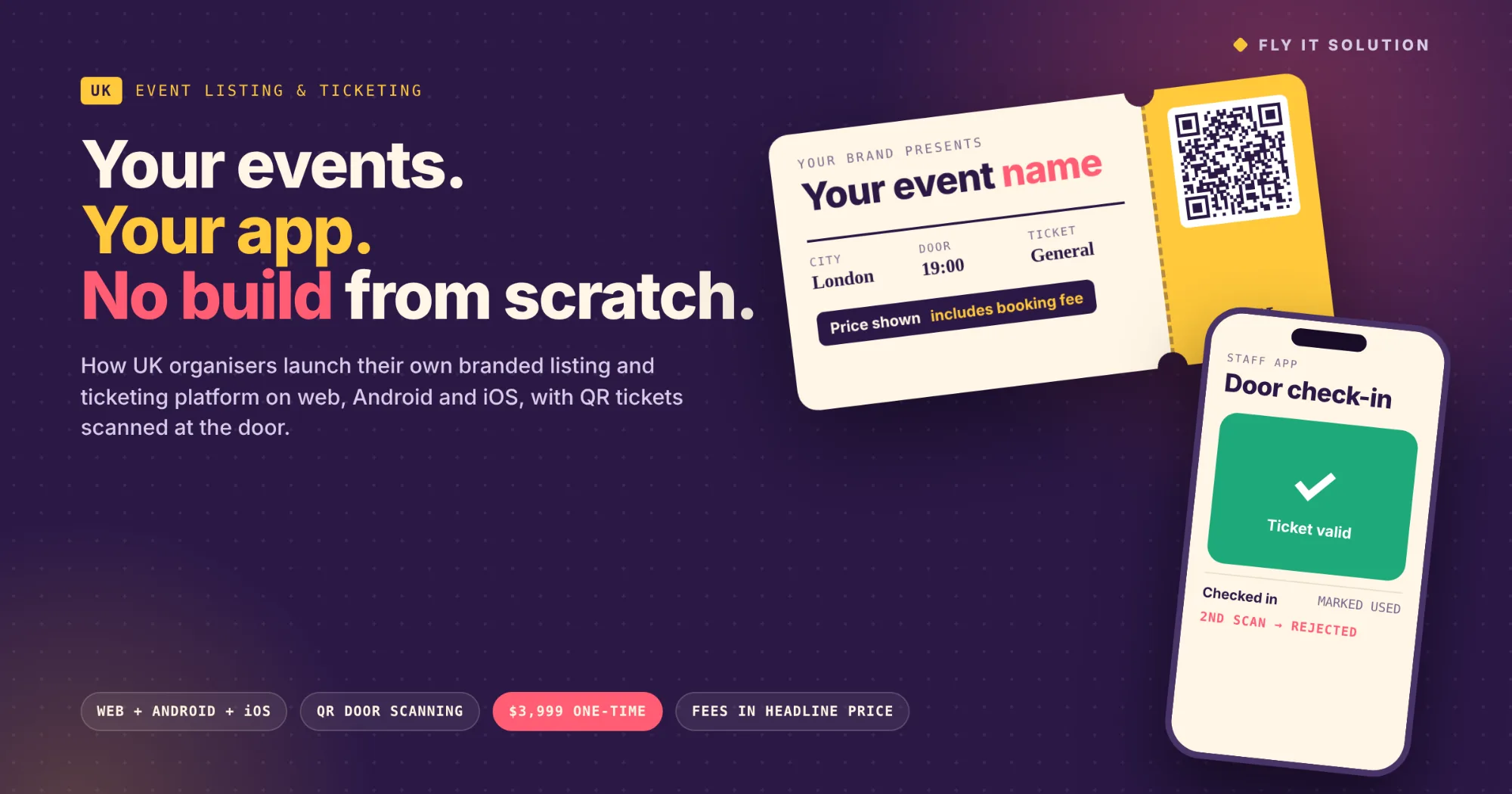
Our white-label event listing platform needed a customer app and a separate staff app on both iOS and Android, with camera-based QR ticket scanning at the door. That is statements one and three: two platforms, one budget, everyday camera use. We built both apps in React Native on a PHP backend, so one codebase serves both stores and any developer the buyer hires later can maintain it.
The operations platform for a medical device distributor needed iOS and Android apps for sales reps and warehouse teams, giving real-time views of cases, inventory and accounts. Here the deciding factors were two platforms, a shared backend with the web system, and a team that needed both apps to behave the same; React Native is in the project's stack.
When a project does need native, for example specialized hardware integration or graphics-heavy features, we build in Swift and Kotlin. The point is to make that decision on what the app does, not on habit.
How to choose: five questions
Answer these in order. Most businesses have their answer by question three.
1. Decide whether you need an app store app at all. If users only need to look things up or fill in forms and you do not need push notifications on every device, camera-heavy features or an app store listing, a progressive web app may be enough.
2. Count the platforms and the budget. If you need both iOS and Android but can fund one development team, cross-platform is usually the practical choice, because one codebase serves both.
3. List the device features the app depends on. Camera, QR scanning, location and push notifications are well covered by cross-platform frameworks. Deep hardware access, new platform features on release day, AR or heavy background processing point toward native.
4. Set the performance bar honestly. Business apps built on forms, lists and dashboards perform well cross-platform. Graphics-intensive games, real-time audio or video processing and complex animations are where native earns its extra cost.
5. Plan for who maintains it. Choose a stack your future developers can work on. One React Native codebase needs one skill set; two native apps need Swift and Kotlin developers, or a team that has both.
Already have an app that needs a rethink?
If you are running two native apps that have drifted apart, or an old hybrid app that users complain about, you do not have to start again from nothing. Legacy code migration moves an app to a modern stack in phases, keeping it live while it is rebuilt.
If you already have an in-house team and need more hands in React Native, Swift or Kotlin, you can hire dedicated developers who join your team and work your hours.
Working with us
As a mobile app development company building both native and cross-platform apps, we have no reason to push one approach. Projects start within 48 hours of agreement, with weekly progress reports, fixed-price or hourly billing, and teams in the US and India for time-zone coverage.
If you are comparing agencies, our checklist on how to choose an MVP development company applies to app projects too. And if you want a straight answer on native or cross-platform for your own app, book a free consultation and you will have a written quote within 24 hours.
Frequently asked questions
Is native or cross-platform app development better for a business?
For most business apps, cross-platform is better value: one codebase serves iOS and Android, so it costs less to build and maintain and both apps stay in step. Native is better when the app depends on deep device hardware, platform features the day they launch, or demanding graphics and real-time processing, where a separate Swift app for iOS and Kotlin app for Android earns its higher cost.
What is the difference between native and cross-platform app development?
Native apps are built separately for each platform in its own language, usually Swift for iOS and Kotlin for Android, with direct access to every platform API. Cross-platform apps are built once in a framework such as React Native or Flutter and run on both iOS and Android from a single codebase, with most device features available through the framework.
Is React Native as fast as a native app?
For typical business screens such as lists, forms, maps, payments and camera scanning, users will not notice a difference in a well-built React Native app. React Native renders real native components, and since version 0.82 its New Architecture is the only architecture. Native still has the edge for graphics-heavy apps, complex animations and intensive real-time processing.
Is cross-platform app development cheaper than native?
Usually, yes. One codebase means one team building, testing and maintaining the app instead of two, and features ship to both platforms together. The saving is largest over the life of the app, because every later change is made once rather than twice.
Should I choose React Native or Flutter?
Both are mature cross-platform frameworks. React Native uses JavaScript or TypeScript and renders native platform components, which suits teams that already work in React for the web. Flutter uses Dart and draws its own interface, which gives very consistent visuals across platforms. The better choice usually follows the skills of the people who will maintain the app.
When should I build a progressive web app instead of a mobile app?
Build a progressive web app when users mostly read information, book or fill in forms, you want one product for desktop and mobile, and you do not need an app store listing or deep device features. It is the lowest-cost option and can be turned into a store app later if usage justifies it.
Which approach does Fly IT Solution use?
We choose per project. Most business apps we build are cross-platform in React Native, including the customer and staff apps of our white-label event listing platform, and we build native iOS and Android apps in Swift and Kotlin when the device features or performance require it. Projects start within 48 hours of agreement, with weekly progress reports and a written quote within 24 hours of a free consultation.