You launch your own event listing platform in the UK without building from scratch by licensing a white-label platform that is already built, putting your brand on it, and going live on your own domain and in the app stores. The build is done; what remains is branding, payments and a test event.
Most UK organisers who ask us about this are not trying to become software companies. They want three things a ticketing marketplace does not give them: their own brand at the point of sale, the buyer's details for the next event, and the ticket money in their own account.
This post explains what that kind of platform needs, what organisers tell us before they switch, what we built to answer them, the UK booking-fee rule you need to set it up around, and how to launch in five steps. If you want to see the product first, it is our white-label event listing and ticketing platform.
What is an event listing platform?
An event listing platform is a website and app where events are published, tickets are booked and paid for, and entry is checked at the door. It is the whole journey from “what's on” to “you're in”, in one system.
A white-label version is the same system licensed to you and branded as yours. Your customers see your name, your logo and your app in the store, not the software company's.
Why UK organisers want their own platform
UK organisers want their own platform because a ticketing marketplace owns the customer relationship. The buyer's details sit in someone else's database, and reaching them for the next event usually means going back through that marketplace.
Your listing also sits next to other organisers' events, and a fee is taken on every ticket you sell. For a promoter running a handful of events a year that is a fair trade; for a venue, festival or organiser running events every week, it is a cost that grows with success.
What UK organisers tell us before they switch
Six statements come up in almost every first conversation, from small promoters to multi-room venues. Each one points to a specific part of the platform.
“We sold out, but we can't email a single buyer about the next one.”
The marketplace has the list; the organiser has a payout report. Every event starts the audience from zero.
What it tells us: the customer record needs to live in the organiser's own system. Bookings and buyer details stored in your deployment fix that.
“Our brand disappears the moment someone clicks Buy.”
The event page is yours, but checkout, confirmation emails and tickets carry another company's name.
What it tells us: branding has to run all the way through. Your logo, colours, domain, email sender and app store listing on every screen is what white-label means.
“The door is a printed list and a queue.”
Staff tick names off a sheet while the queue grows, and nobody knows the head count until the night is over.
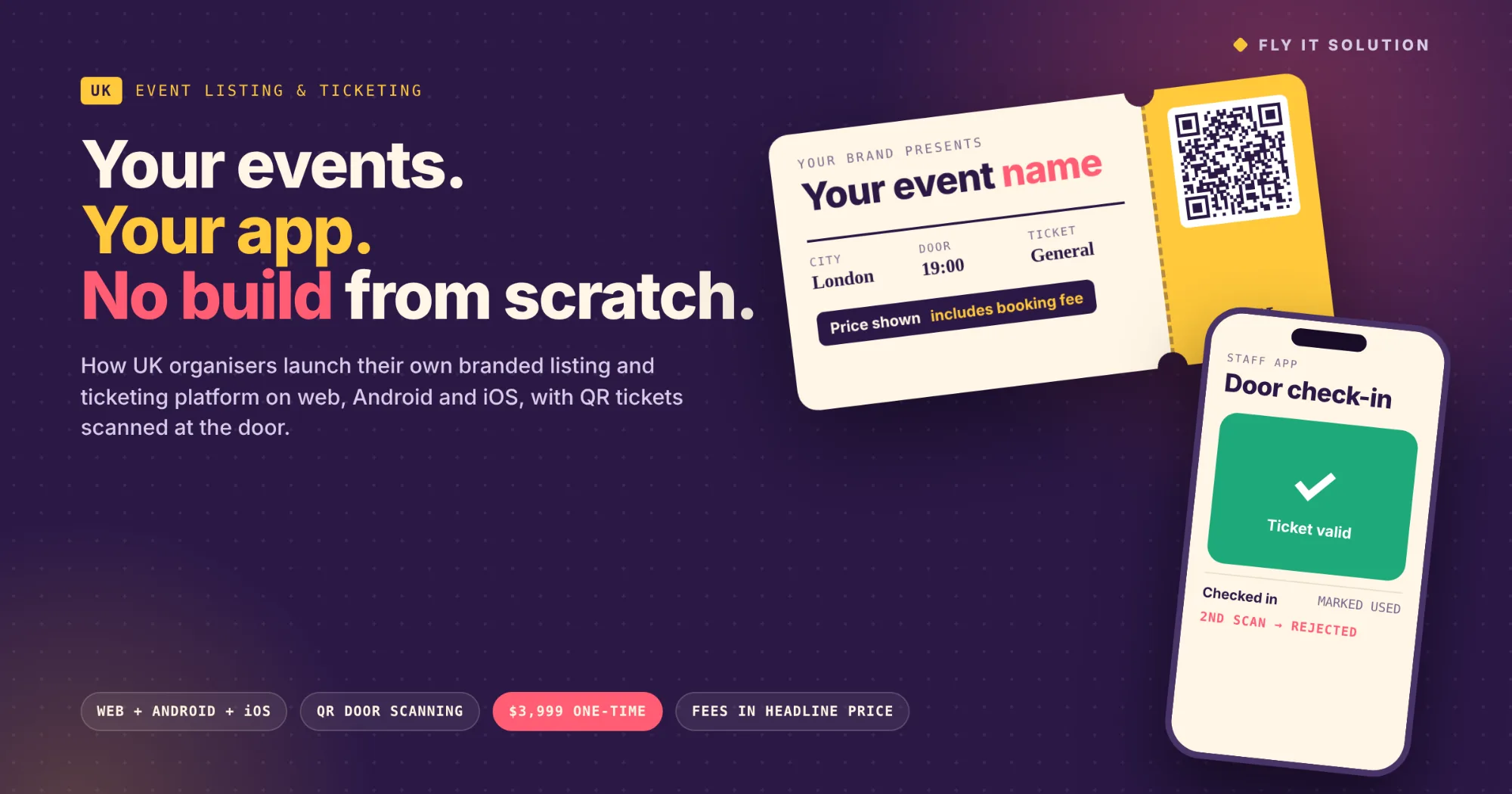
What it tells us: entry needs scanning, not reading. QR e-tickets checked by a staff app turn a two-minute search into a one-second scan.
“A screenshot of one ticket got three people in.”
Without a scan that marks a ticket as used, one paid ticket can be shared around a group chat.
What it tells us: every ticket needs a single-use check. The platform flags a ticket as used on the first scan and rejects the second.
“We want our own app, but a custom build was quoted at a figure we can't justify.”
Listings, booking, payments, QR tickets and a door app for Android and iOS is a real piece of software, and quotes from scratch reflect that.
What it tells us: the organiser needs the result, not the build. A finished platform licensed once removes the development cost and most of the risk.
“We're never sure the price we advertise is the price people pay.”
Booking fees added at checkout used to be normal. In the UK they now carry legal risk, which we cover below.
What it tells us: ticket prices need to be set up with every mandatory fee included from the start. On your own platform, you control exactly what the listing shows.
The solution we built: one platform, three apps
We built an event listing platform under your own brand that answers those six statements with three apps on one backend. It is a finished product that we license, brand and launch for you.
Organiser web app. Publish events with dates, venue, images and ticket types; see bookings and payments; watch check-ins on the night.
Customer app for Android and iOS. Attendees browse events, book, pay and keep their tickets, in an app published in the stores under your name.
Staff app for ticket verification. A separate app for your door team only: scan the QR code, see it confirmed, and see used tickets flagged.
QR code e-tickets. Every paid booking issues a ticket with its own QR code, in the app and by email.
Payments into your own account. Online payments connect to your own payment gateway, so ticket revenue is paid to you, not held by a marketplace.
White-label branding. Your logo, colours, domain, email sender and app store listings.
Standard technology. A PHP backend and web app, and React Native mobile apps, so one codebase serves Android and iOS and any developer you hire later can maintain it.
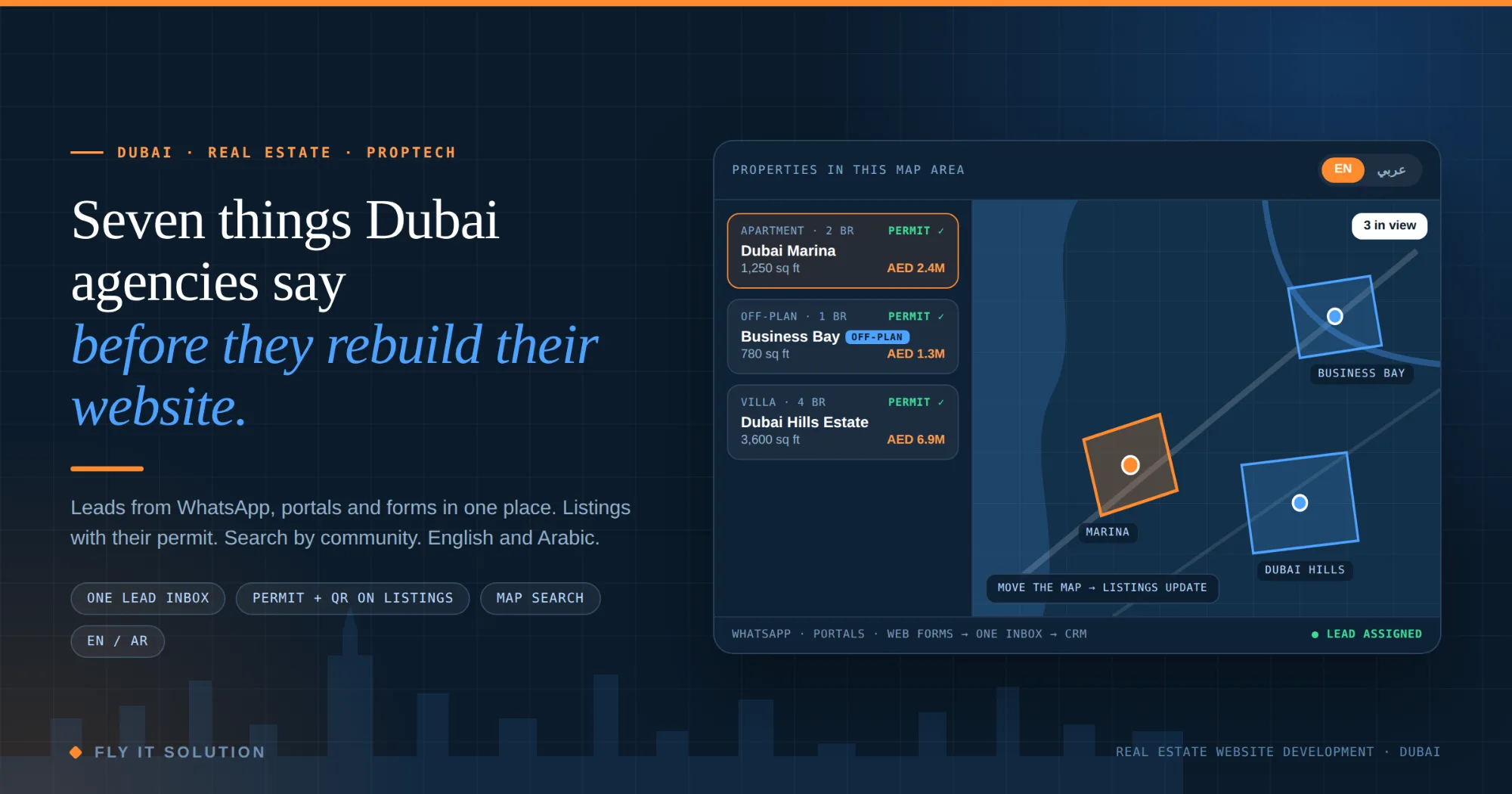
Listing platforms are work we have done before in other sectors. Our land and property listing platform, for example, handles map search, wishlists, buyer requests and a single lead inbox across role-based admin, staff and client views. The same discipline of listing, search and enquiry runs through the event platform.
The UK booking-fee rule you need to set up around
In the UK, booking fees that a customer cannot avoid normally have to be included in the headline ticket price. The drip-pricing rules in the Digital Markets, Competition and Consumers Act 2024 took effect on 6 April 2025, and the Competition and Markets Authority enforces them.
The CMA price transparency guidance says the total price should normally include unavoidable charges, names a booking fee as an example, and says showing mandatory charges separately will not normally be enough. Its own worked example is a theatre production with a per-transaction charge built into the advertised price.
On your own platform this is a set-up decision rather than a problem: when you create ticket types, enter the full price the customer must pay, so the listing, the app and the checkout all show the same figure. This is a summary of the rule, not legal advice; confirm your own obligations with the CMA guidance or a solicitor.
Build from scratch or launch a white-label platform?
Launch a white-label platform if you run events the way most UK organisers do: list, sell, pay, scan. It is faster, it costs a fraction of a custom build, and the hard parts, payments and door scanning, are already tested.
Build from scratch only if your idea is a new kind of events business, such as a marketplace whose product is the platform itself. Even then, start with MVP software development: one core flow in front of real users before the rest is built.
We license the same way across sectors, from repair workshop software to a homecare management platform, because most businesses in an established category need the same core system with their own name on it.
What it costs
The platform is a one-time licence of $3,999, priced in US dollars, with three months of maintenance, server setup and deployment free. There is no monthly platform fee from us, and ticket revenue goes to your own gateway account.
The licence covers branding, deployment on your domain, organiser and staff role setup, training, documentation and a post-launch support period. Add-ons such as seat maps, memberships or accounting integrations are scoped after launch.
If you are weighing a one-time licence against per-ticket or monthly fees, the reasoning in our post on paying once versus paying monthly applies to ticketing in the same way: the more events you run, the more owning the platform wins.
Who it is for in the UK
It suits anyone who lists events and sells tickets under their own name: event organisers and promoters, venues and halls, festival and conference teams, community and faith organisations, colleges, universities and clubs, and ticketing resellers.
Location in the UK makes no difference to the platform. Whether you run events in London, Manchester, Birmingham, Bristol, Edinburgh or Glasgow, the apps, the scanning and the payments work the same way.
How to launch in five steps
Most of the time goes into branding, payments and app store review, not development. These are the steps in order.
1. Decide what you are launching. Write down who lists events on your platform, who buys tickets, which ticket types you sell and how staff check people in at the door. This becomes the scope for the discovery call.
2. Open your payment and app store accounts. Set up a merchant account with the payment gateway you want, and Apple and Google developer accounts in your company's name, so ticket money and the apps are yours from day one.
3. Brand and configure the platform. Add your logo, colours, domain and email sender to the web app and both mobile apps, connect your payment gateway, and set up organiser and staff roles.
4. Run a test event end to end. Publish a test event, book and pay for a ticket in the customer app, and scan the QR e-ticket in the staff app, with your team doing each step before anything goes live.
5. Go live and list your first real event. Launch on your domain and in the app stores, list your first event with all mandatory fees in the headline price, and use post-launch support through your first events.
Working with us from the UK
We work with UK organisers by video and email. Our development centre in Mohali, India runs from 9am to 11pm IST, which covers the whole UK working day, with design and delivery support from our team in Minneapolis.
On a first call we create a test event, book a ticket in the customer app and scan it in the staff app while you watch, then talk through branding, your payment gateway and a launch date. If that sounds useful, talk to us.
Frequently asked questions
Can I launch my own event ticketing platform in the UK without building it from scratch?
Yes. A white-label event listing platform is already built; you license it, put your own brand on it and launch it on your domain and in the app stores. Ours includes an organiser web app, a customer app for Android and iOS, a staff app that scans QR e-tickets at the door, and online payments into your own gateway account, for a one-time licence of $3,999 with no monthly platform fee.
How much does a white-label event listing platform cost?
Our white-label event listing and ticketing platform is $3,999 one-time, priced in US dollars, with three months of maintenance, server setup and deployment free. The licence includes branding, deployment on your domain, organiser and staff role setup, training, documentation and a post-launch support period. There is no monthly platform fee from us, and ticket revenue goes to your own payment gateway account.
Do UK booking fees have to be included in the ticket price?
Mandatory fees, including booking fees, normally have to be included in the headline price under the Digital Markets, Competition and Consumers Act 2024, whose drip-pricing rules took effect on 6 April 2025. The CMA's price transparency guidance says showing mandatory charges separately will not normally be enough to comply. When you set up ticket types on your own platform, put the full price the customer must pay in the listing; confirm your own obligations with the CMA guidance or a solicitor.
How do QR e-tickets and door scanning work?
When a customer books and pays, the platform issues an e-ticket with a unique QR code in the customer app and by email. At the venue, staff open the separate staff app and scan it; the platform confirms the ticket and marks it as used, so the same ticket cannot be scanned twice.
Who owns the customer data on a white-label ticketing platform?
You do. Bookings and buyer details sit in your own deployment rather than on a third-party marketplace, so you can contact past attendees about future events within your UK GDPR obligations. Payments go to your own merchant account.
How long does it take to launch?
Launch runs in four steps: discovery, branding and setup, testing and training, and go-live on your domain and in the app stores. Because the platform is already built, most of the time goes into branding, payment setup and app store review rather than development, and the launch date is confirmed on the discovery call.
Can Fly IT Solution support UK organisers in UK working hours?
Yes. Our team works with UK clients by video and email, and our development centre in Mohali, India operates 9am to 11pm IST, which covers the full UK working day. Design and delivery support also comes from our team in Minneapolis.